
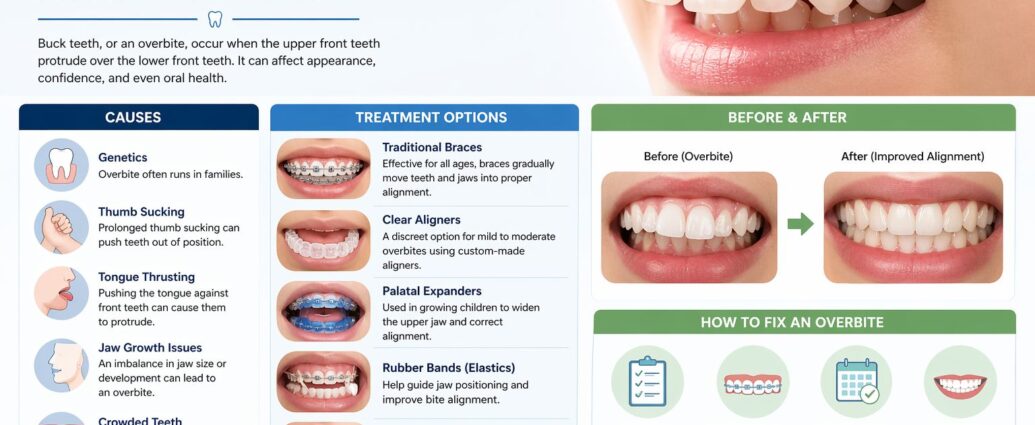
Most people recognize the term “buck teeth” immediately. While it describes a common dental alignment issue, the clinical term is actually a malocclusion or an overbite. For many, this condition is a source of self-consciousness. However, it often involves more than just how a smile looks. If left unaddressed, an overbite can lead to significant dental health problems and physical discomfort. Fortunately, modern orthodontics offers a variety of ways to correct this condition, ranging from discreet aligners to traditional braces.
Correcting misaligned teeth improves your appearance and protects your long-term oral health. This article explores why buck teeth develop, the health risks they pose, and the best treatment options available today. Understanding your options is the first step toward a healthier, more confident smile.
What Exactly Are Buck Teeth?
Clinically referred to as a Class II malocclusion, buck teeth occur when the upper front teeth protrude significantly beyond the lower front teeth. While a slight overlap is normal, a pronounced protrusion creates functional and aesthetic concerns. There are two primary ways this misalignment manifests: dental and skeletal.
Overjet vs. Overbite
People often confuse these two terms, but they describe different types of misalignment. An overjet occurs when the upper teeth point outward at an angle, creating a horizontal gap between the upper and lower teeth. An overbite refers to a vertical overlap where the upper teeth cover too much of the lower teeth. Most cases of “buck teeth” involve a combination of both.
- Dental Overbite: This happens when the teeth themselves are misaligned, but the jaw structure is normal.
- Skeletal Overbite: This occurs when the upper jaw is too large or the lower jaw is too small, forcing the teeth into an unnatural position.
The Common Causes of Buck Teeth
Several factors contribute to the development of protruding teeth. In most instances, the cause is a mix of genetic traits and behavioral habits formed during early childhood. Identifying the root cause helps orthodontists determine the most effective treatment plan.
Genetics and Family History
Just like eye color or height, jaw shape and size are hereditary. If your parents or siblings have buck teeth, you are more likely to develop them as well. Some individuals are born with a smaller lower jaw or an abnormally shaped upper jaw, which naturally forces the teeth to protrude as they emerge.
Childhood Habits
Early childhood behaviors significantly impact how the jaw and teeth develop. Prolonged thumb-sucking or the use of a pacifier beyond age three can push the front teeth forward and alter the shape of the roof of the mouth. Because the jaw is still soft and growing in young children, constant pressure from a thumb or pacifier creates a lasting deformity.
Tongue Thrusting
Tongue thrusting is a condition where the tongue presses too far forward in the mouth during swallowing or speaking. This repetitive pressure against the back of the front teeth gradually pushes them outward. If this habit continues into adolescence, it can result in a severe overbite that requires professional correction.
Missing or Impacted Teeth
When teeth are missing or extra teeth grow in (hyperdontia), the remaining teeth shift to fill the gaps. This shifting can cause the front teeth to tilt forward. Similarly, impacted teeth that fail to emerge correctly can disrupt the alignment of the entire arch.
Potential Health Risks of Untreated Overbites
Ignoring buck teeth can lead to complications that extend far beyond aesthetics. When teeth do not meet correctly, the entire oral ecosystem suffers. Because of this, dental professionals strongly recommend early consultation.
- Speech Impediments: Protruding teeth can make it difficult to pronounce certain sounds, such as ‘s’, ‘f’, and ‘t’.
- Chewing Difficulties: Improper alignment prevents the molars from meeting correctly, which hinders effective chewing and can lead to digestive issues.
- Jaw Pain and TMJ: Misalignment places excessive strain on the temporomandibular joint (TMJ), leading to chronic headaches and jaw pain.
- Increased Risk of Trauma: Protruding teeth are much more susceptible to being chipped or knocked out during sports or accidental falls.
- Gum Disease and Decay: Hard-to-reach areas created by crowded or protruding teeth make it difficult to brush and floss effectively, increasing the risk of cavities.
Modern Treatment Options for Buck Teeth
The field of orthodontics has evolved rapidly. Patients no longer have to rely solely on bulky metal appliances. Depending on the severity of the overbite and the patient’s age, several effective treatments are available.
Traditional Metal Braces
Metal braces remain the gold standard for correcting severe skeletal and dental misalignments. They use a system of brackets and wires to apply constant, gentle pressure on the teeth. Over time, this pressure moves the teeth into the desired position and can even help reshape the jaw alignment in younger patients.
Clear Aligners (Invisalign)
For those seeking a more discreet option, clear aligners are highly effective for mild to moderate cases of buck teeth. These removable plastic trays are nearly invisible and allow for easier cleaning and eating. However, success depends heavily on patient compliance, as the aligners must be worn for at least 22 hours per day.
Palate Expanders
Often used for children and teenagers, palate expanders widen the upper jaw. This creates more room for teeth to grow in naturally and can reduce the severity of a protruding overbite before it becomes a permanent skeletal issue. Because the jaw is still developing in younger patients, expanders can achieve results that might otherwise require surgery in adulthood.
Jaw Surgery (Orthognathic Surgery)
In extreme cases where the overbite is caused by a significant skeletal discrepancy, surgery may be necessary. A maxillofacial surgeon repositions the jawbones to achieve proper alignment. This is usually paired with braces before and after the procedure to ensure the teeth settle into the correct spots.
Can You Fix Buck Teeth at Home?
Actually, attempting to fix your own teeth is dangerous and can lead to permanent tooth loss. “DIY” orthodontic kits or hacks found on social media often cause irreparable damage to the roots and gums. Professional supervision is essential because moving teeth too quickly or incorrectly can cut off the blood supply to the tooth or cause the bone to dissolve. Always consult a licensed orthodontist for any alignment concerns.
Taking the Next Step Toward Your Best Smile
Addressing buck teeth is a vital investment in your long-term health and self-esteem. Whether the cause is genetic or a result of childhood habits, modern dental technology provides comfortable and efficient solutions for everyone. By correcting an overbite, you reduce the risk of tooth decay, improve your speech, and protect your jaw from chronic pain. Instead of living with discomfort or hiding your smile, schedule a consultation with an orthodontic specialist. They will provide a customized roadmap to help you achieve a functional, beautiful, and healthy smile that lasts a lifetime.
Frequently Asked Questions
How much does it cost to fix buck teeth?
The cost varies based on the treatment method and the severity of the case. Traditional braces typically range from $3,000 to $7,000, while clear aligners like Invisalign may cost between $3,500 and $8,000. Many dental insurance plans cover a portion of orthodontic work.
Can buck teeth be fixed in adults?
Yes, buck teeth can be fixed at any age. While it is often easier to treat children whose jaws are still growing, modern techniques allow adults to achieve excellent results using braces, aligners, or surgery if necessary.
How long does the treatment usually take?
Treatment time depends on the complexity of the misalignment. On average, most patients wear braces or aligners for 12 to 24 months. Skeletal issues requiring surgery may involve a longer timeline.
Do buck teeth always need to be fixed?
If the overbite is very mild and causes no physical issues, treatment might be optional. However, if the protrusion causes speech issues, pain, or difficulty cleaning the teeth, professional correction is highly recommended to prevent future complications.