
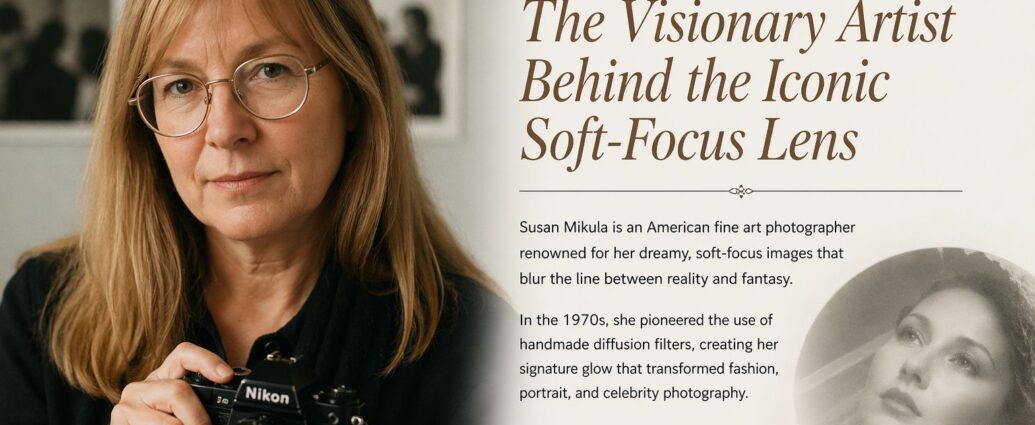
When discussing the most influential figures in contemporary photography, the name Susan Mikula naturally rises to the surface. Known for her ethereal, soft-focus aesthetic and her refusal to embrace the digital revolution, Mikula has carved a unique space in the art world. Her work challenges the viewer to look beyond the surface of a subject, focusing instead on the interplay of light, shadow, and memory. While many recognize her as the long-term partner of MSNBC host Rachel Maddow, Mikula stands as a formidable creative force whose career spans decades of meticulous exploration and artistic innovation.
Her approach to photography is both ancient and modern. By using vintage cameras and expired film, she creates images that feel like artifacts from a dream. This detailed overview explores her life, her technical process, and the significant impact she has made on the visual arts landscape.
Defining the Mikula Aesthetic: Soft Focus and Light
Susan Mikula does not strive for the clinical sharpness that defines modern digital photography. Instead, she seeks a visceral, emotional connection to her subjects. Her work often appears blurry or impressionistic, a style achieved through intentional technical choices. She relies heavily on ambient light, avoiding artificial flashes or complex studio setups. This commitment to naturalism ensures that every photograph captures the raw atmosphere of a specific moment.
The Allure of Analog Photography
In a world obsessed with megapixels and instant editing, Mikula remains a staunch advocate for the analog process. She primarily uses a Polaroid SX-70 camera, a legendary tool known for its distinctive color palette and unpredictable nature. Using this medium requires a level of patience and intuition that digital cameras simply cannot replicate. Because she often uses expired film, the chemical reactions are unique to each shot, resulting in textures and hues that are impossible to perfectly simulate in post-production.
Chronology of a Creative Career
Born in 1958 in New Jersey, Susan Mikula eventually settled in Western Massachusetts, a region that has significantly influenced her perspective on landscapes and industrial beauty. Her artistic journey began in earnest in the 1990s. Unlike many artists who pursue formal schooling, Mikula is largely self-taught. This independence allowed her to develop a visual language free from the constraints of academic tradition.
- 1998: Her first solo exhibition in New York City marks her arrival as a serious contender in the fine art photography scene.
- 2008: She releases the ‘American Bond’ series, which remains one of her most acclaimed bodies of work.
- 2017: Mikula is commissioned by the Art in Embassies program to create site-specific works for the U.S. Consulate in Nuevo Laredo, Mexico.
Signature Collections and Major Works
To understand Susan Mikula is to understand her specific collections. Each series acts as a thematic investigation into a particular environment or concept. She doesn’t just take pictures; she conducts visual research into the history and soul of a location.
American Bond: A Study of Infrastructure
Perhaps her most famous project, American Bond, is a three-part series focusing on the industrial landscape of the United States. She traveled from the Port of Long Beach in California to the industrial corridors of the Northeast. The images do not look like traditional architectural photography. Instead, massive cranes and storage tanks appear as ghostly silhouettes. By stripping away the sharp edges of these metal giants, she highlights their massive scale and the quiet power they hold over the American economy.
Island: The Beauty of the Border
In her ‘Island’ series, Mikula explores the landscape of the Texas-Mexico border. Rather than focusing on the political turmoil often associated with the region, she turns her lens toward the land itself. The soft focus lends a sense of timelessness to the terrain, suggesting that the earth exists far beyond the temporary borders drawn by humans. This series showcases her ability to tackle complex geographical themes through a purely aesthetic and emotional lens.
The Technical Process: Stripping Away the Digital
One of the most remarkable aspects of Mikula’s work is her refusal to use digital manipulation. There is no Photoshop or Lightroom involved in her process. She does not even crop her images. What the camera captures is exactly what the viewer sees. This ‘in-camera’ philosophy places a high stakes demand on her skills at the moment of the shutter click.
- Selection of Film: She sources vintage and expired films to achieve specific grain structures and color shifts.
- Wait and Observe: She spends hours watching how light moves across her subject before taking a single frame.
- Chemical Development: The physical development of the film is part of the art, as environmental temperature and humidity influence the final product.
Life with Rachel Maddow: A Private Power Couple
While Susan Mikula is a private individual, her relationship with Rachel Maddow is a point of public interest. The two met in 1999 when Maddow was finishing her doctoral dissertation and working odd jobs. Mikula hired her to do yard work at her home in Massachusetts. Since that first meeting, they have built a life centered on mutual respect and shared intellectual interests.
They split their time between a pre-Civil War farmhouse in Western Massachusetts and an apartment in Manhattan. Despite Maddow’s high-profile career as a political commentator, they lead a relatively quiet life. Maddow frequently credits Mikula as her ‘rock’ and the person who helps her maintain a healthy perspective on the world. Their partnership is often cited as one of the most stable and enduring in the public eye.
Impact on Contemporary Photography
Mikula has influenced a new generation of photographers who are moving back toward analog mediums. Her success proves that there is a significant audience for art that prioritizes mood over clarity. By focusing on the ‘feeling’ of a place rather than its literal representation, she has expanded the definitions of what landscape photography can achieve. Her work is held in numerous private and public collections, testifying to its lasting value in the art market.
Final Perspective on Susan Mikula’s Contributions
Susan Mikula’s career is a masterclass in staying true to a singular vision. In an era where technology moves at a dizzying pace, she reminds us of the power of slowing down. Her use of vintage equipment and her focus on the atmospheric quality of light allow her to capture the world in a way that feels both nostalgic and forward-thinking. Whether she is photographing the industrial piers of the coast or the quiet interiors of a home, her work remains deeply human and profoundly moving. She continues to be a vital voice in the arts, proving that sometimes the best way to see the world is through a softer, more thoughtful lens.